Intro
What is public-good allocation: Supply used for airdrop distribution
First, BTCMobick clarifies that public-good allocation is not a general shared tool but a separate supply connected to free distribution, sunk costs, and supply reconciliation.
In BTCMobick, the term public-good allocation does not align with general public goods like roads, open source, or free educational materials. Here, it should first be understood as a term referring to a separate supply linked to ecosystem expansion and airdrop distribution after the hard fork.

The core point is that this is a free distribution structure designed so participants spend time, effort, and travel costs to obtain it, not supply sold for money. This sunk cost creates the perception of 'I didn't buy it, but I spent costs to get it,' and as multiple participants share similar experiences, price perception and P2P trading arise. This is the key explanation of the BTCMobick monetary phenomenon.
Therefore, beginners should not accept public-good allocation as just a positive term but should sequentially examine what supply it is, how it was distributed, how it is currently accounted for in the ledger, and why it differs from the old total supply numbers left in searches.
Plain words
First-time terms
- Public-good allocation
- A separate supply allocated for airdrops and ecosystem expansion in BTCMobick.
- Sunk cost
- Costs that are already spent and not easily recoverable, such as time, effort, and travel expenses.
- Total supply misunderstanding
- Confusion arising from mixing past ledger displays with current mainnet supply explanations.
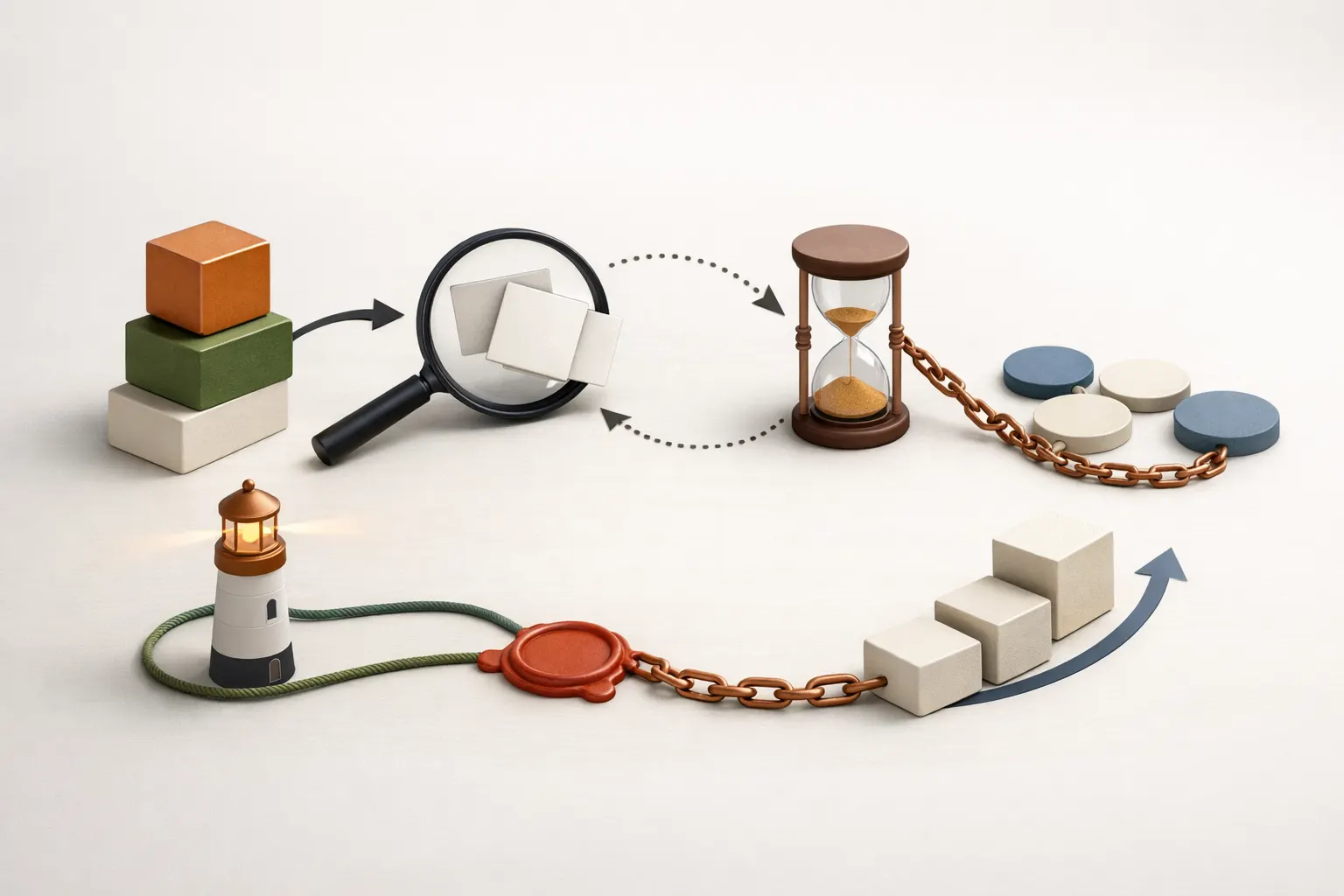
Learning objectives
- Separate the meaning of public-good allocation in BTCMobick context from general public goods.
- Understand how airdrops, sunk costs, and P2P trading formation are explained as a single flow.
- Distinguish early total supply criticism from the current 21 million supply explanation.
This term means distribution supply, not a shared tool
In general economics, public goods are described as goods accessible to all, but the public-good allocation used in the BTCMobick community differs from that meaning.
Official characteristic materials explain public-good coins connected to ecosystem expansion, free corporate transfers, airdrops, public wallets, and burn plans. Therefore, this lesson first defines public-good allocation as 'a separate BTCMobick distribution supply.'
Currently, the mainnet compares bundles of PG-01~15 and PG-M addresses together. Establishing this definition allows reading public-good wallet sealing, lockups, airdrops, supply reconciliation, and early criticism in the same context.
Airdrop distribution with sunk cost attached
Official monetary phenomenon writings explain that participants are designed to spend costs like time, effort, and travel expenses to obtain coins. The Gwanaksan, Gyeryongsan, Jeju Island, LA, and Australia airdrops should be read not as simple giveaways but as distribution structures with participation costs.
The important term here is sunk cost. People cannot easily ignore costs already spent, and when many share the same experience, it becomes easier to assign a price to the item.
The BTCMobick monetary phenomenon explanation is understood at this point. It is not a price prediction but a context explaining how people perceived 'not something received for free' but 'something obtained by spending costs.'
Early criticism is linked to total supply misunderstanding
The early Korean Bitcoin community's attack point was not simply 'a hard fork happened.' It was based on the Bitcoin 10th anniversary ledger split, with additional separate distribution supply, making it appear that total supply once exceeded 35 million, which was a core criticism.
Previous official characteristic materials' public-good, airdrop, and future mining numbers are separated as pre-mainnet explanations. The current quantity is viewed as the value calculated from block 1 premining, migration blocks 4864~4890 transfer amounts, and mined amounts to date from the explorer.
If values over 35 million remain on Google or old information sites, they should be viewed separately from the current mainnet maximum supply explanation of 21 million.
How to calculate public-good allocation in the ledger
The public-good lesson is insufficient by memorizing a single quantity. Initial premining supply, migration transferred supply, mined supply to date, and burned or movement-restricted targets must be separated.
As of 2026-04-30, based on explorer height 38087, the calculated value is 15,926,880.744 BMB. The key formula is '19,687,500 - 3,879,641.131 + 119,021.875 = 15,926,880.744.'
Verification is simpler. Subtracting the migration 4864~4890 recipient output sum 3,879,641.131 from the current UTXO set total_amount 19,806,521.875 yields the same value. The 3.125 at height 0 is a nonstandard output separately counted as unspendable in the UTXO set.
Distinguishing search total supply from current ledger
Early search results or old information sites may show total supply over 35 million. This value should be viewed as the past context where Bitcoin ledger supply and separate distribution supply appeared together.
Current learners should check the official homepage's 21 million maximum supply display, the current ledger after New Bedford, and public-good wallet and migration records together.
Visual Summary
Public-good allocation and mainnet calculation at a glance
BTCMobick's public-good allocation is not a general shared tool but a separate supply allocated for airdrops and ecosystem expansion. The current quantity is calculated from the explorer ledger after New Bedford.
DefinitionDistribution supplyAirdrop and ecosystem expansion
VerificationLedger calculationPremining - migration + mining
Referenceheight 38087Checked 2026-04-30
Exclusion3.125height 0 unspendable
Supply calculation
Recalculate with values confirmed on the current mainnet.
block 1 coinbase - 3.125
4864~4890 · 382,060 outputs
height 1~38087
Current ledger calculated value
Supply - migration = public-good
Current official homepage display
Verification materials
Each value is divided by role in the explorer.
Block 119,687,503.125Premining + rewards
Migration4864~4890382,060 recipient outputs
Remaining4895Remaining public-good address transfer
UTXOheight 38087total_amount verification
Addresses15+1Current + post-migration management
The purpose of this table is not price judgment but to separate previous explanation numbers from current mainnet calculated values.
Live Ledger
Current public-good allocation wallets
This total is the live balance lookup for the current public-good allocation address list. The ledger-calculation reference value and the actual remaining wallet balance can diverge after airdrops and migrations.
Memory Points
Points to remember
Public-good allocation is a supply name, not a positive term
BTCMobick's public-good allocation does not start from the general shared goods concept. It refers to supply linked to ecosystem expansion and airdrop distribution after the hard fork.
This supply is explained alongside free distribution, public wallets, lockups, burn plans, and corporate/community expansion rather than sales narratives.
Therefore, when explaining public-good allocation, check quantity, addresses, transferability, distribution records, and post-migration status before assuming good intentions.
Monetary phenomenon starts from sunk cost
Official monetary phenomenon writings explain that people are designed to spend time, effort, and travel expenses to obtain coins. When these costs remain as sunk costs, holders find it difficult to sell cheaply.
Events like Gwanaksan where participants met in person confirm individual experience as collective experience. This is explained as the background for price perception and P2P trading.
This context is not a price inducement but a monetary phenomenon document explaining how money arises through social trust and costs.
Practice
Break down public-good sentences into four boxes
- Draw four boxes on paper for definition, distribution method, supply, and verification materials.
- In the definition box, write 'Separate supply linked to airdrop distribution and ecosystem expansion.'
- In the distribution method box, write free distribution and sunk cost; in the supply box, write 35 million+ misunderstanding and current ledger calculation 15,926,880.744.
- In the verification materials box, write official characteristic page, current official homepage, PG-01~15, PG-M, and explorer.
Learners can explain public-good allocation not as a vague positive term but divided into supply, distribution, supply quantity, and ledger verification.
Create a supply misunderstanding summary table
- In the left box, write the past display 35 million+.
- In the middle box, write current ledger units like premining 19,687,500, migration transfer 3,879,641.131, current mining 119,021.875, and public-good calculation 15,926,880.744.
- In the right box, write current maximum supply 21 million and explorer data to check.
Learners can distinguish old total supply numbers from current supply explanations without mixing them in one sentence.
Key takeaways
- BTCMobick's public-good allocation means a separate distribution supply, not a general shared tool.
- Airdrop distribution is explained as the BTCMobick monetary phenomenon creating price perception and collective behavior through sunk costs.
- Old 35 million+ total supply displays and current 21 million target supply explanations must be read separately.
- The public-good lesson requires separating past total supply displays from current mainnet supply explanations.
Quiz
Quiz
What misunderstanding should be avoided when first learning about public-good allocation in BTCMobick?
What materials are needed to verify public-good allocation in the ledger?
How should the 35 million+ total supply criticism and 21 million target supply explanation be read?
Evidence and statusSources connected
This localized lesson keeps the same source IDs as the Korean curriculum. Use the source library for ledger checks and official references.
- claim-public-good-frame
- claim-public-good-airdrop-sunk-cost-experiment
- claim-public-good-supply-migration-correction
- claim-public-good-quantity-needs-ledger-close
- claim-public-good-current-wallets